
Trieste’s forced Italianization left many scars and injuries that are hard to heal. Like a hurricane, the winds of nationalism blowing from the occupying Country devastated and distorted this suffering land.
After World War I and after the 1920 annexation of Trieste, Italy attempted to cancel the 536 years of the Habsburg Empire’s civilization, forcing its own legal system and racist policy on the occupied territories.
This is how people used to tolerance and multi-ethnicity were brutalized with the laws of a new imperialist nation in search of an easy revenge on Austria-Hungary, regarded as a multi-centurial enemy.
In this land, the enemy of choice were the “despicable” Slavs, regarded to as an inferior race in the name of the Roman Empire’s faded glory.
Those Slavs were Slovenes, Croats, Slovaks, Czechs, Poles, Ucraininas, Serbs, Bosnians. In WWI they had fought together, like lions, defending their lands from the Italian aggression.
Trieste suffered from the Italian annexation: her multicultural soul was raped to the depth.
Racial persecutions, tax repression, Special Courts, antisemitism. The new regime’s priority was eradicating the culture of Trieste’s people. A program was carried out even with the hateful, forced Italianization of family names.
In a few years, Trieste’s people lost an identity they had built for centuries. This is also when they started migrating en masse. A meaningful example of this ipernationalistic madness is the campaign to “redeem” the Karst’s many caves.
During the Austrian era, Trieste made history exploration the Karst’s extended hypogeal environment, now a World Heritage site.
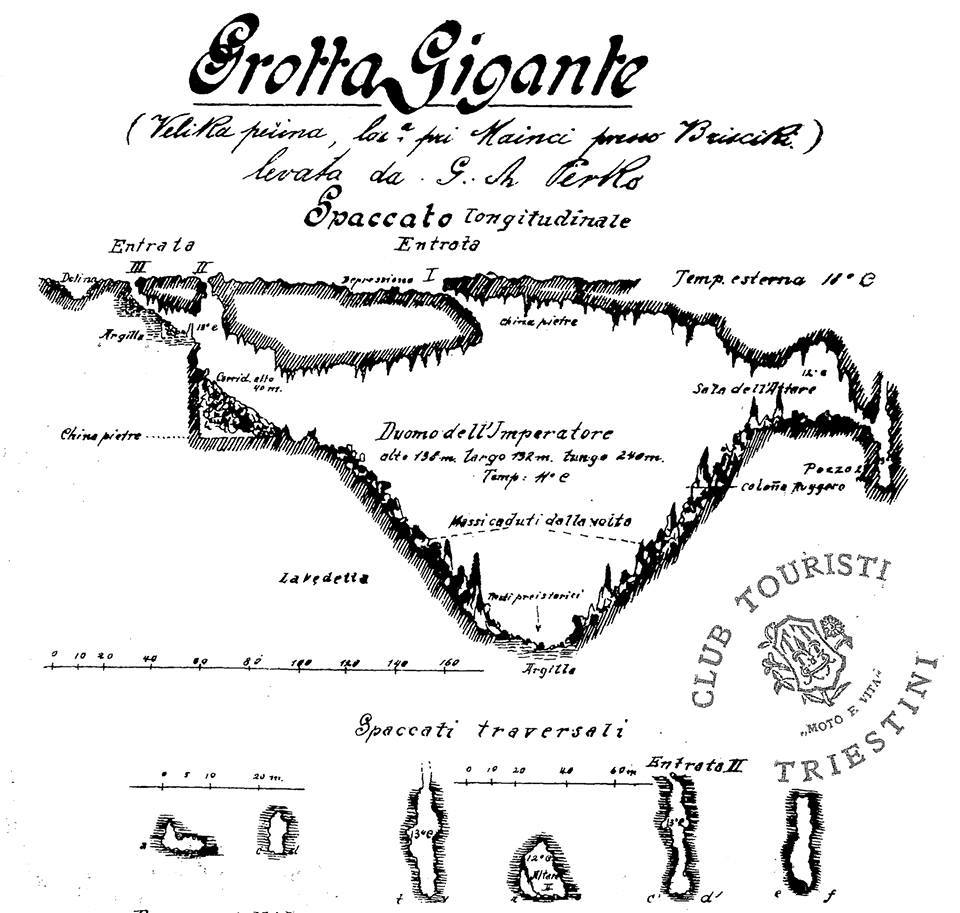
Glorious groups like the CTT – Club Touristi Triestini and the Alpenverein were first in line, leading the exploration. In particular, in 1908, it was the CTT to open an entrance in Trieste’s main Karst cave: the Grotta Gigante. Until 1918, the CTT owned both the Grotta Gigante and the equally famous Škocjan Cave.
Not even those history-rich clubs were spared by Italian nationalism’s burning rage. The clubs were dissolved one after another, and their caves were handed over to the loyal alpinism-speleological clubs established under the Fascist regime.
Historical archives document such ransacking very well. Follows an abstract from book “2.000 grotte” (2000 caves, translation care of S.V.):
“In 1921, and again in 1922, the Alpenverein and the Club Touristi Triestini (an Italian name for an exclusively foreign and anti-Italian filiation) attempted to reprise their activity, which is nefarious to the Nation, and with the firm purpose to distort the Italian character of Venezia Giulia.
The documental evidences of their tendentious actions are published by the Alpina in booklet “liberiamo le nostre terre!” [let us free our lands!] which is a noble call for protection by Italian authorities…
After an unrested campaign for the dissolution of those clubs, and for the redemption of all the caves that are still in their hands: San Canziano, Gigante, Sotto Corona, the Alpina has finally succeeds, with the raise of the Mussolini Government, becoming able to legally purchase [the caves], and to ultimately put an end to all operations of the two anti-Italian clubs”.
This is the “redemption” of Trieste’s caves. These caves would be redeemed once again: after 26 October 1954, when the Italian Government was entrusted by the Governments of the United States and of the United Kingdom with a mandate to exercize temporary civil administration of Trieste, which in the meantime had become a Free State under the 1947 Peace Treaty with Italy; but this time redemption came as pollution, as the hazardous waste of the bordering Italian Republic poured in the bowels of the earth.
The mission of the nationalism in present-day Europe, at the expenses of Trieste and of its citizens was complete.
Translated from blog “Environment and Legality” – “Ambiente e Legalità” by Roberto Giurastante
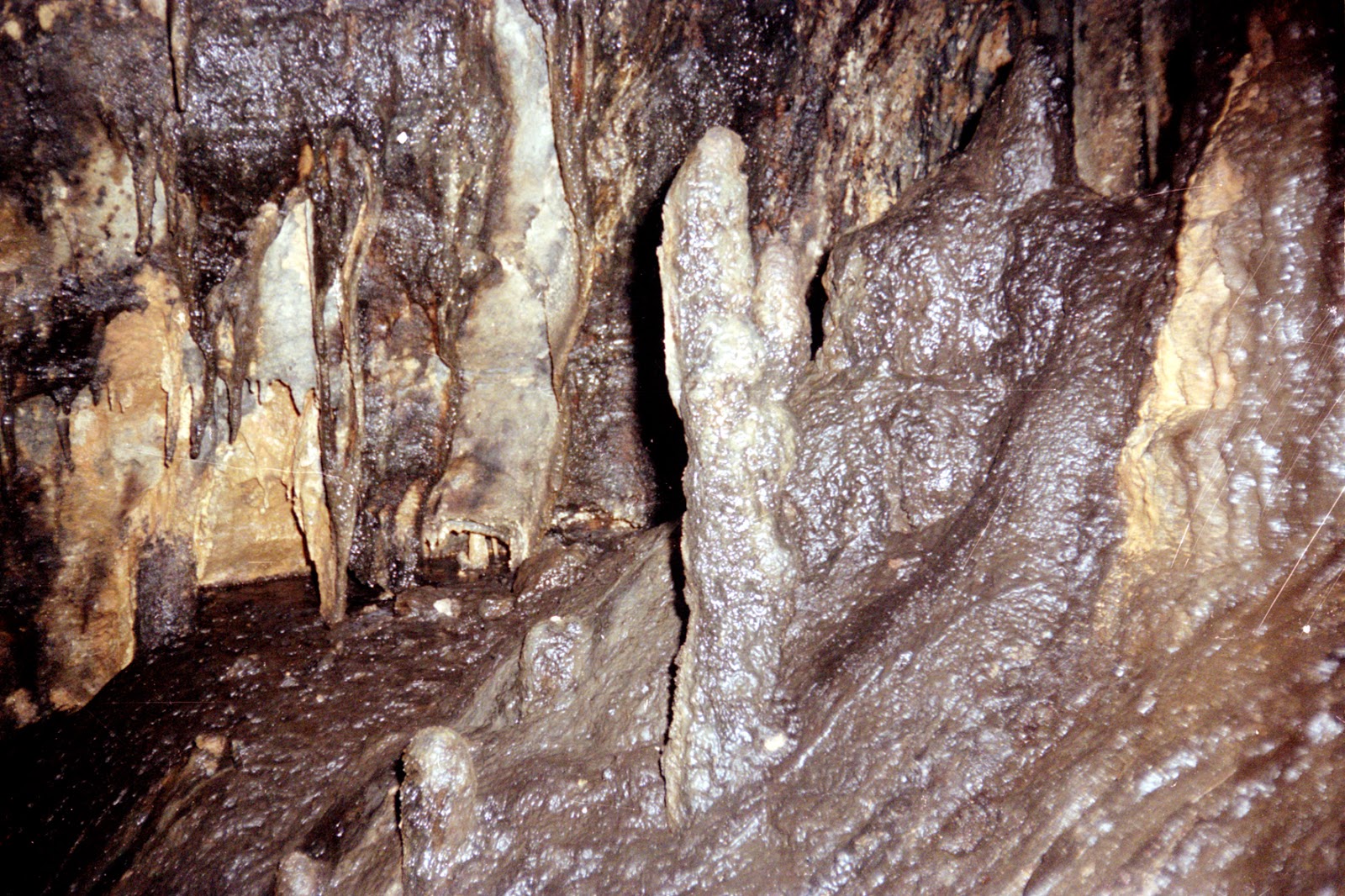
Trieste, a cave of the Karst that was used as a disposal site: there is bitumen on its walls.
RT @TriesteLibera: @RobertoGiurasta THE REDEMPTION OF TRIESTINE CAVES ACCORDING TO ITALIAN NATIONALISM #Trieste #environment #history https…
RT @TriesteLibera: THE REDEMPTION OF TRIESTINE CAVES ACCORDING TO ITALIAN NATIONALISM by @RobertoGiurasta #Trieste #environment https://t.c…
THE REDEMPTION OF TRIESTINE CAVES ACCORDING TO ITALIAN NATIONALISM by @RobertoGiurasta #Trieste #environment https://t.co/nf97UJCmxN
RT @TriesteLibera: THE REDEMPTION OF TRIESTINE CAVES ACCORDING TO ITALIAN NATIONALISM by @RobertoGiurasta #Trieste #environment https://t.c…
RT @TriesteLibera THE REDEMPTION OF TRIESTINE CAVES ACCORDING TO ITALIAN NATIONALISM by @Ro… https://t.co/lQuVHvukuG https://t.co/vLN2kM0imA
RT @TriesteLibera: THE REDEMPTION OF TRIESTINE CAVES ACCORDING TO ITALIAN NATIONALISM by @RobertoGiurasta #Trieste #environment https://t.c…
RT @TriesteLibera: THE REDEMPTION OF TRIESTINE CAVES ACCORDING TO ITALIAN NATIONALISM by @RobertoGiurasta #Trieste #environment https://t.c…
THE REDEMPTION OF TRIESTINE CAVES ACCORDING TO ITALIAN NATIONALISM by @RobertoGiurasta #Trieste #environment https://t.co/ZyhX57hRsa
@RobertoGiurasta THE REDEMPTION OF TRIESTINE CAVES ACCORDING TO ITALIAN NATIONALISM #Trieste #environment #history https://t.co/ZyhX57hRsa
THE REDEMPTION OF TRIESTINE CAVES ACCORDING TO ITALIAN NATIONALISM https://t.co/ZyhX57zsjI https://t.co/VO6S0tdwjB